


A Public Response to a Long-Awaited Decision
For months, Brick Lane waited.
The public Inquiry had closed. Evidence had been heard. Save Brick Lane, Tower Hamlets Council, the appellants and local residents had all entered the formal record. Yet the Inspector’s reasoning and the Secretary of State’s decision remained unpublished. In our earlier article, Brick Lane, Peckham and the Political Economy of Planning, we argued that this period mattered democratically. Brick Lane was not only waiting for an outcome. It was waiting for an explanation.
That explanation has now arrived.
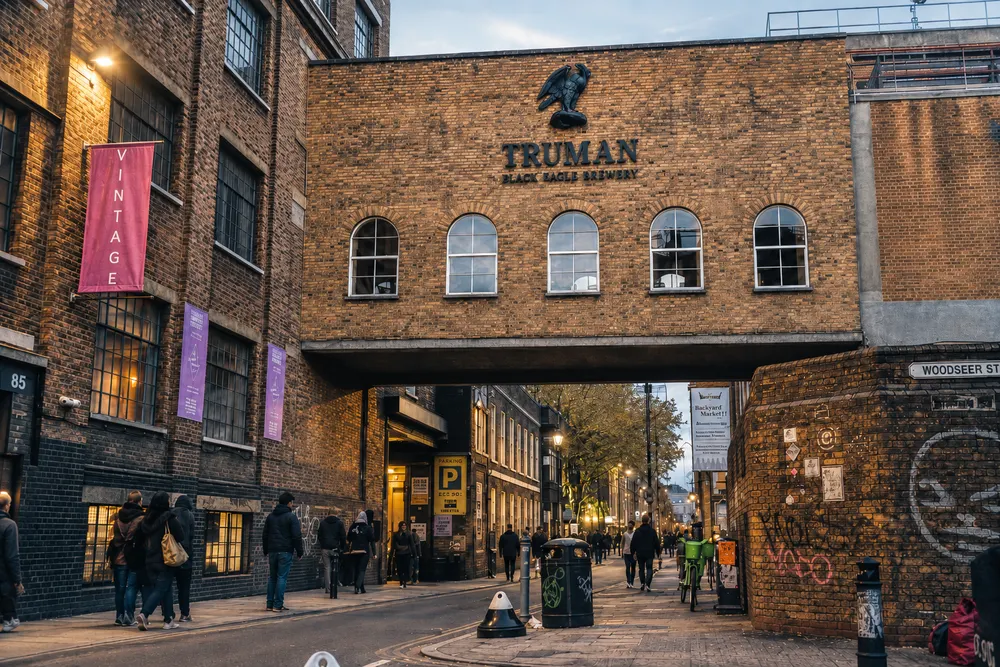
On 29 July 2026, the Secretary of State allowed all four Truman Brewery appeals. The decision grants permission for the Grey Eagle Street data centre, the main Truman Brewery redevelopment, the Ely’s Yard commercial building and listed building consent for works to the Boiler House. The decision was made by Matthew Pennycook MP, Minister of State for Housing and Planning, on behalf of the Secretary of State.
This is a major defeat for those who fought the proposals. But it is not the end of public scrutiny.
A decision of this importance does not close the democratic argument simply because it has been issued. On the contrary, publication of the decision opens the next stage of public examination. The local community has waited for the reasoning. It is now entitled to read it, question it, understand how its evidence was treated, and consider whether the decision was lawfully made.
That is especially important because this case has never been only about buildings. Across our Brick Lane coverage, we have examined the Truman Brewery proposals as a test of planning power, public participation, heritage, housing need, class, land value, data infrastructure and the future of a historic working-class and migrant district. In our article on Brick Lane and Peckham, we asked who creates the value of a city, who owns the land through which that value is converted, who benefits from consent, who bears the loss, and what is owed back to the public from whom that value first arose.
Those questions have not been answered by the ruling. They have been sharpened by it.
The ruling acknowledges community concern. It recognises the significant Bangladeshi population living and working in and around Spitalfields and Banglatown. It accepts heritage harm. It notes the emerging Tower Hamlets Local Plan allocation for a residential-led scheme. Yet it nevertheless gives limited weight to that residential-led direction and gives significant weight to the asserted need for the data centre, commercial floorspace, employment generation and projected economic effects.
In our first response to the decision, Truman Brewery Approved: What Legal Questions Now Arise?, we identified the main areas requiring urgent legal scrutiny: the Public Sector Equality Duty, public participation, the emerging residential-led allocation, the data-centre reasoning, environmental assessment, heritage harm and the treatment of Brick Lane’s existing economy.
This article takes that first response further and sets out an open basis for the legal challenge. It is not a final legal pleading. It is not a substitute for advice from specialist planning solicitors and counsel. It is a public framework for identifying the strongest possible grounds of challenge and for explaining why the local public has a legitimate interest in seeing the ruling tested.
The Legal Route Is Narrow, But the Public Interest Is Broad
A statutory review is not a second planning appeal.
The High Court would not be asked to decide whether the Truman Brewery redevelopment is a good or bad scheme. It would not substitute its own planning judgement for that of the Secretary of State. The legal question would be narrower: whether the decision was lawfully made.
A challenge would therefore have to identify an error of law. That might include a failure to discharge a statutory duty, a misunderstanding or misapplication of planning policy, inadequate reasons, failure to take account of a legally relevant matter, unlawful treatment of environmental assessment, irrationality in the public-law sense, or failure to grapple properly with evidence that was before the Inquiry.
But the narrowness of the legal route should not obscure the wider public importance of the exercise.
The public Inquiry was a democratic process. Residents, campaigners and the local authority placed evidence and arguments before the Inspector. The decision letter and Inspector’s Report now reveal how that evidence was translated into findings, weight and final approval. The local public therefore has every right to examine whether that translation was lawful, fair and adequately reasoned.
The question is not simply whether people were allowed to speak. It is whether what they said was properly understood, weighed and answered.
Why the Inquiry Record Must Now Be Reviewed
The first task is to reconstruct the case from the Inquiry record.
A legal challenge cannot be built only from anger at the result. It must be built from the documents: the decision letter, the Inspector’s Report, Save Brick Lane’s evidence, the Council’s case, the appellants’ evidence, the Environmental Statement, the equality material, the emerging Local Plan, the heritage evidence, the section 106 obligations and the conditions attached to the permission.
The purpose is to identify what was before the decision-maker, how it was treated, and whether the reasoning was legally adequate.
This work is urgent because the decision letter states that any challenge must be brought within six weeks from the day after the date of the decision letter.
The review should not try to turn every political objection into a legal ground. Some powerful arguments about justice, class, land value and displacement may not, by themselves, found a statutory review. But they provide the essential context for understanding why particular legal questions matter: equality, housing policy, data-centre reasoning, environmental assessment, heritage harm, public participation and reasons.
Potential Grounds for Review
1. Public Sector Equality Duty
The first area requiring close legal review is the Public Sector Equality Duty.
The decision records that due regard was given under section 149 of the Equality Act 2010. It also notes the significant Bangladeshi population living and working in and around Spitalfields and Banglatown, and it acknowledges community concerns about the potential impact of the proposals on that specific community.
The question is whether that was enough.
Save Brick Lane’s case was not simply that the development was unpopular. The concern was that Brick Lane and Banglatown hold particular cultural, social, religious, economic and historical significance for Bengali and Bangladeshi communities. The potential impacts were therefore not only physical or commercial. They included cultural erasure, weakened community identity, displacement pressure, exclusion from meaningful participation, and harm to the local businesses and social networks through which the community’s presence is sustained.
This matters because equality is not satisfied merely by noting that protected communities exist or that concerns were raised. The decision-maker must engage with the likely equality impacts with sufficient rigour.
A possible ground for review is therefore whether the Public Sector Equality Duty was discharged in substance, or whether equality concerns were acknowledged only to be absorbed into the wider planning balance.
2. Public Participation and the Right to Be Heard Properly
The local public has waited a long time for this ruling. Having participated in the process, it is entitled to understand how its evidence was treated.
The decision states that the community was very well informed and had sufficient opportunity to participate. It also acknowledges concerns around consultation, public participation and engagement.
That conclusion now needs to be tested against the record.
The question is not simply whether consultation events occurred, documents were published, or objections were received. The deeper question is whether the process enabled meaningful participation by the communities most affected, including Bengali-speaking residents, local traders, tenants, market users and those whose relationship to Brick Lane is cultural and social as well as commercial.
This point may be strongest when linked to the Public Sector Equality Duty. If protected communities were not effectively reached, heard, translated for, or understood, that may affect whether the equality duty was lawfully discharged.
A possible ground for review is whether the decision lawfully concluded that participation was sufficient, particularly in light of the equality evidence and the long-standing concerns about consultation.
3. The Emerging Residential-Led Plan
The second major area is the treatment of the emerging Tower Hamlets Local Plan.
The draft Local Plan contains Site Allocation 1.7: Brick Lane and Pedley Street. That allocation covers the appeal sites and proposes a mixed-use, residential-led scheme providing 800 homes and up to 33,000 square metres of non-residential floorspace. The Council argued that the allocation should attract moderate weight, and Save Brick Lane supported that position.
The Secretary of State gave the emerging allocation no more than limited weight. Reasons included the stage of the plan, the unresolved landowner objection, the absence of a viability assessment, the absence of detailed evidence of a deliverable alternative residential-led scheme, and the fact that no alternative residential-led application was before the Secretary of State.
This raises a serious legal and democratic question.
Was the emerging residential-led planning framework lawfully and adequately weighed? Or was a public planning direction weakened because the landowner objected and because the community and Council had not produced a fully worked-up alternative application?
That matters because the issue was not whether Save Brick Lane had become a developer. The issue was whether the appeal schemes themselves made proper use of the land in light of housing need, local policy, emerging policy and the wider public interest.
A possible ground for review is whether adequate reasons were given for reducing the emerging allocation to limited weight, and whether the decision lawfully treated the absence of an alternative application as a reason for allowing the landowner’s scheme to proceed.
4. Data Centre Need and Claimed Economic Benefit
The data centre is central to the ruling.
The decision letter gives significant weight to the asserted need for the data centre and to the economic benefits claimed for it. It adopts the Inspector’s conclusion that the public benefits of the data centre would be “very significant indeed”, and accepts the argument that London requires additional data-centre capacity.
But that framing remains highly contested.
The question is not whether digital infrastructure has any social use. It plainly does. The question is whether a general need for data-centre capacity lawfully justifies this particular data centre, on this particular site, in this particular conservation-area setting.
Our earlier political-economic analysis argued that the data-centre element is not merely another land use. It is a mechanism through which a general claim of infrastructure need can be attached to a privately controlled site, converted into planning weight, and then into land value, uplift and rent.
The likely flow of value is not primarily local. The data centre would convert a general social need — digital infrastructure — into a privately controlled, rent-bearing asset. The uplift created by land, permission, power, connectivity and scarcity would flow primarily to those who control or finance the asset: the landowner, developer, investors, lenders, operator and corporate users of the infrastructure. It would not primarily flow through local jobs, local footfall, small businesses or the existing Brick Lane economy.
A possible ground for review is whether the decision adequately explains the move from general data-centre need to significant planning weight for this specific proposal, and whether it properly grapples with limited local employment, inactive frontage, public-realm harm, environmental burden, opportunity cost and contested local economic return.
5. The Existing Brick Lane Economy
The ruling gives significant weight to employment generation and economic benefits. It relies on the appellant’s evidence of office floorspace, projected expenditure, gross value added and job creation, and it accepts that increased footfall would provide a boost to businesses and curry houses on Brick Lane.
This is one of the most politically important parts of the decision.
The ruling credits the economy promised by redevelopment. But the issue is whether it gives proper force to the economy already there: small traders, curry houses, markets, cultural work, local employment, informal networks, and the everyday social life that has made Brick Lane valuable.
The previous article framed this as a question of political economy: Brick Lane is not an empty development opportunity. It is a lived district whose value has been produced by labour, migration, trade, worship, food culture, markets, small business, artistic practice and everyday use.
As a legal ground, this may be difficult unless contrary evidence was ignored, misunderstood or inadequately reasoned. But it remains central to the review because the claimed economic benefits should not be treated as neutral facts. They are projections attached to a development model.
A possible ground for review is whether the decision treated contested projected benefits as settled public benefit while failing to engage adequately with the risk of economic displacement, local business disruption or damage to Brick Lane’s existing economy.
6. Heritage Harm and the Planning Balance
The decision letter accepts that the schemes will cause harm to the Brick Lane and Fournier Street Conservation Area, including harm arising from the loss of important views. It describes that harm as less than substantial and at the lower end of the scale, while giving it formal “great weight”.
But this should not disguise the seriousness of the issue.
In a conservation area of this significance, the loss of historic views, the erosion of setting, the weakening of legibility and the insertion of large new commercial forms are not minor matters in any ordinary sense. They go to the character, memory and recognisability of Brick Lane as a historic urban district.
The ruling does not deny heritage harm. That is precisely the point. It acknowledges the harm, classifies it, gives it formal weight, and then finds that it is outweighed by claimed public benefits.
Heritage is therefore not protected as a decisive public inheritance. It is treated as a cost that can be outweighed by brownfield policy, design claims, commercial floorspace, employment projections, data-centre need and the asserted economic benefits of redevelopment.
A possible ground for review is whether the heritage harm was understated, whether the cumulative effect of the schemes was properly assessed, whether claimed heritage and townscape benefits were overstated or double-counted, and whether the statutory duties under the Listed Buildings Act were given real force.
The issue is not simply that campaigners disagree with the balance. It is whether the balance was lawfully struck.
7. “Better Than Baseline” Reasoning
Another issue concerns the way the decision treats existing poor conditions.
Several parts of the reasoning rely on the idea that existing buildings, frontages or public-realm conditions are poor, derelict, inactive or harmful, and that the proposed development would therefore improve the position.
That reasoning needs close legal review.
The danger is that a harmful scheme may be treated as acceptable because it is better than a neglected baseline. But conservation policy is not satisfied merely because a new development is tidier, newer or more coherent than a currently degraded site. The question is whether the proposal preserves or enhances the significance, character and appearance of the conservation area when assessed against the correct legal and policy standards.
A possible ground for review is whether the decision fell into “better than baseline” reasoning: treating improvement over dereliction as sufficient to overcome harm, rather than asking whether the scheme itself was acceptable in heritage, townscape and public-realm terms.
8. Environmental Assessment, Air Quality and Generators
The decision states that the Environmental Statement, as amended and supplemented, complied with the Environmental Impact Assessment Regulations and provided sufficient information to assess the environmental impact of the proposals.
But the conditions for the data-centre permission require later assessment and approval of important matters, including detailed air-quality modelling of on-site combustion and generator sources, Air Quality Neutral calculations, pollutant concentrations at façade locations and mechanical ventilation intake points. The conditions also require later details of generators, including number and type, locations, stack heights, operation and testing schedules, emissions compliance and evidence that cleaner alternatives have been prioritised before any diesel option is considered.
That may be lawful if the Environmental Statement already assessed the likely significant effects and the later conditions merely secure final details and mitigation.
But it requires urgent expert review.
The issue is whether the likely significant environmental effects of the data centre — including generator emissions, cooling, energy demand and air-quality impacts — were assessed before permission was granted, or whether essential assessment has been deferred until after consent.
A possible ground for review is whether the decision unlawfully deferred environmental assessment to post-permission conditions.
9. Conditions and Planning Obligations
The permission relies heavily on conditions and planning obligations.
These deal with matters including construction management, materials, public realm, landscaping, servicing, fire safety, noise, air quality, generators, active frontages, opening hours and future details.
This matters because many of the claimed benefits and mitigations depend on future approval, future management and future enforcement.
A possible ground for review is whether any conditions are too vague, defer essential matters, fail to secure the benefits relied upon in the planning balance, or leave unresolved matters that should have been settled before permission was granted.
This issue requires close review of the section 106 obligations and the full schedule of conditions.
Preliminary Grounds Map
This table sets out the principal areas that now require urgent legal review. It is not a final pleading, but a public framework for testing whether the Truman Brewery decision was lawfully made.
| Potential issue | Why it matters | Possible legal question |
|---|---|---|
| Public Sector Equality Duty | Brick Lane and Banglatown have particular significance for Bengali and Bangladeshi communities. | Was the equality duty discharged in substance, or only acknowledged formally? |
| Public participation | The public waited for the decision and is entitled to know how its evidence was treated. | Was participation meaningful, especially for the communities most affected? |
| Emerging residential-led allocation | The emerging plan proposed a residential-led scheme with 800 homes. | Was it lawful to give this no more than limited weight? |
| Data-centre need | General digital-infrastructure need was attached to this specific site. | Was the move from general need to this particular approval adequately reasoned? |
| Existing Brick Lane economy | The ruling credits projected redevelopment benefits over existing local economic life. | Were contested economic benefits treated as settled? |
| Heritage harm | The decision accepts harm but allows it to be outweighed. | Was the heritage balance lawfully struck and were statutory duties given real force? |
| Better than baseline reasoning | Existing dereliction or inactivity may have been used to justify harmful replacement. | Was improvement over a poor baseline wrongly treated as sufficient? |
| Environmental assessment | Generator and air-quality details are left to later conditions. | Were likely significant effects assessed before consent? |
| Conditions and obligations | Benefits and mitigations depend on future controls. | Are the conditions precise, enforceable and sufficient? |
What Should Happen Now
The immediate task is not to declare the decision unlawful. That would be premature.
The immediate task is to test it.
Specialist planning solicitors and counsel should urgently review the decision letter, the Inspector’s Report and the Inquiry record. That review should identify which points are arguable as legal grounds and which, although politically important, are unlikely to support a statutory review.
The review should be structured around five questions:
What evidence was before the Inquiry?
How did the Inspector deal with it?
How did the Secretary of State deal with it?
Was the reasoning adequate and lawful?
Is there an arguable ground for statutory review?
The public also needs to understand the cost and risk. A statutory review will involve court fees, legal fees and potential adverse-costs exposure. Costs protection may be available in some planning and environmental cases, but this must be checked by lawyers before any proceedings are issued.
The legal route is narrow. Even if a challenge succeeds, the court would not normally refuse the scheme itself. The likely result would be that the decision is quashed and returned for redetermination.
But that does not make the legal route unimportant.
This decision raises serious questions about how public need, landowner power, infrastructure claims, housing policy, heritage, equality and the existing Brick Lane economy have been weighed. It also raises a democratic question: whether a community that has participated in good faith is entitled to more than acknowledgement before its evidence is set aside.
Brick Lane waited for an explanation.
Now that explanation must be tested.