Who Captures Liverpool Street? A Political Economy of Network Rail & ACME - Part II
Without a station first baseline, without a clearly costed and deliverable minimum scope that could be pursued without the commercial overbuild, the city cannot honestly judge what it is buying and what it is surrendering.


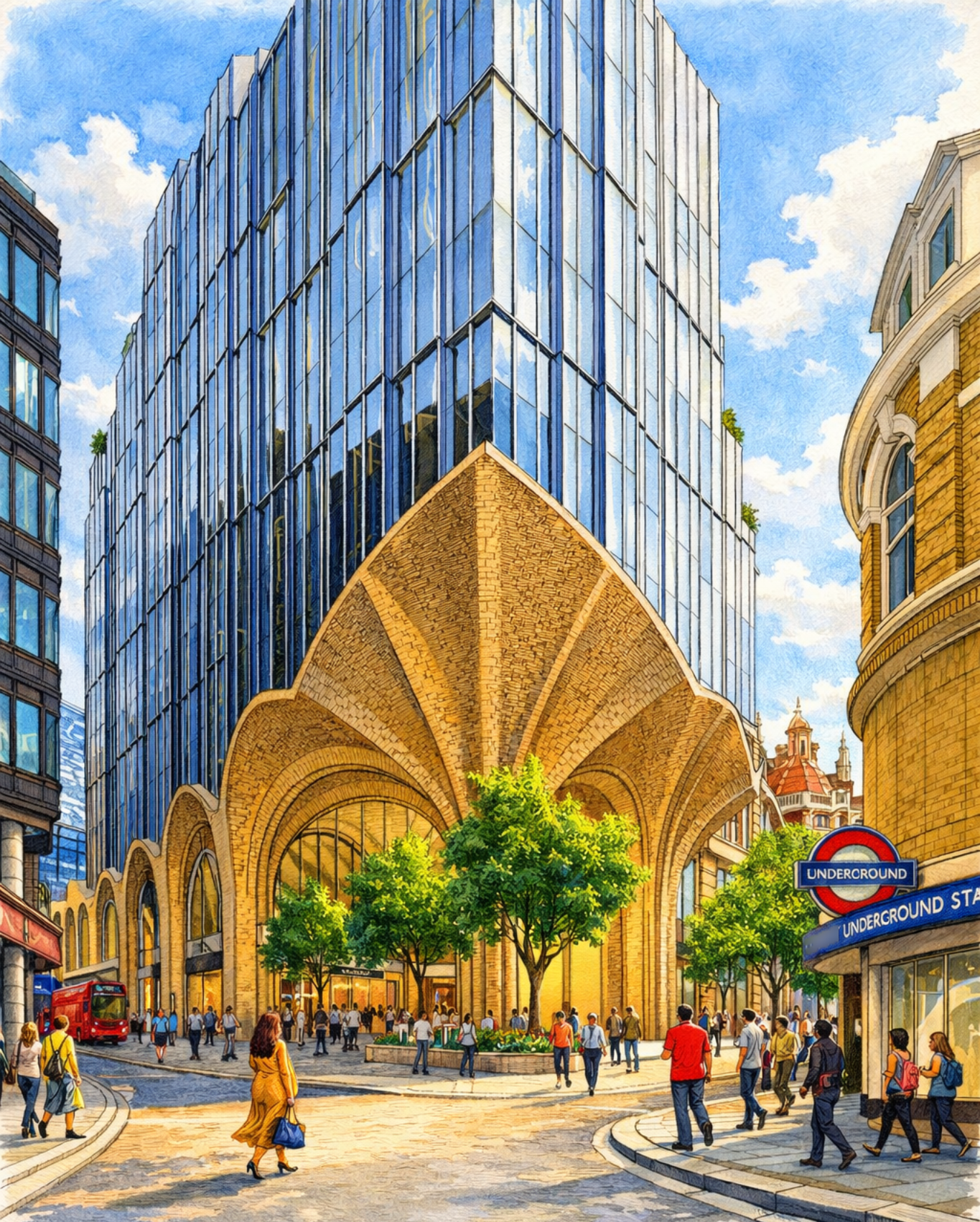
Political Economy Part II
Network Rail, ACME, and the Viability Machine
Liverpool Street has been approved, and the argument is meant to close. That is how authority now works. It does not answer the question, it ends the meeting. But a vote is not a proof. It is a decision taken inside a frame, and frames are the real instruments of power.
Part I named the missing hinge. There is no published, costed station first minimum baseline, the one document that would let the public test the central claim that demolition and over station massing are necessary, not merely lucrative. Part II goes where modern planning prefers you not to look. It goes into the machinery that manufactures necessity, the viability doctrine, the consultant economy, and the quiet conversion of public infrastructure into a development platform.
1. Start with the proportions: what this scheme actually is
Strip away the soothing language and keep the numbers. Planning is full of soft nouns such as “enhancement,” “activation,” “improvement,” “placemaking,” words that make the hard thing sound like a community service. So take the project at its own quantitative face value, because arithmetic is where the candour lives.
The over station development is 958,687 sq ft GIA of offices, nineteen storeys, reaching a maximum height of 97.67m AOD. That is not an accessory. That is the engine. It is the rentable machine built above a national station, tuned for yield, measured in lettable area, priced in the language of investment committees. It behaves like a financial asset because it is a financial asset. Everything else, in the application’s internal logic, is arranged around it.
Alongside it sits the commercial refit below. Station Retail at 119,229 sq ft GIA, modelled with an efficiency of 86.8%, while the office component is modelled at 71.5% efficiency. Those efficiency figures are not incidental technicalities. They are the fingerprints of intent. Efficiency is simply the polite term for how much of the built volume is rendered into saleable, chargeable, monetisable interior, how much of the physical world is converted into revenue space rather than corridors, cores, plant, circulation, and constraint. It is extraction dressed up as optimisation.
And it tells you something else. The scheme is not merely big, it is carefully composed to be legible to finance. Retail, with its higher efficiency, speaks the quick turn language of cashflow, footfall, units, rent, churn. Offices, with their lower net to gross, carry the heavy apparatus of height, cores, lifts, structure, services, because height is not built for the station’s convenience but for the tower’s market position. Different efficiencies, same principle.
Once you see the proportions, you see the method. The station is the moral warrant, the offices are the financial instrument. The frame of the public realm supplies legitimacy, the story of access, safety, and capacity, the implied shame of being against improvements. The commercial mass supplies the money, the mechanism by which works are said to become possible, the device that turns obligation into opportunity. In this arrangement, the offices lead, and the station is summoned as justification.
This is why the numbers matter more than the adjectives. They show where the scheme’s centre of gravity truly sits. A public station is made to do two jobs at once, to be repaired, and to confer political cover on a privately rentable volume above it. The result is not simply redevelopment. It is a familiar political economic technique. Attach a universally supported public good to a specific private accumulation strategy, then insist the strategy is the only route to the good.
Keep the numbers. They do not merely describe the scheme. They explain it.
2. “Self funded” is a political technique: bundling
The planning case does not simply say, we want an office building. It says, we must have an office building, because the office building funds the station. That is the bundle. A private tower wrapped around a public necessity, profit welded to access, massing stapled to mobility. Once bundled, the debate is disciplined. The argument no longer proceeds as a contest of alternatives. It proceeds as a test of loyalty. You are invited to endorse the package, not to examine its parts.
In that framing, the office block is not presented as a choice in a crowded city of choices. It is presented as the price of decency. Question the office quantum and you are made to sound as though you question step free access. Query the height and you are made to sound as though you query safety. Raise the possibility of a station first baseline, of doing the transport work without the maximal commercial overbuild, and the rebuttal arrives already rehearsed. So you do not want improvements. This is how a choice is dressed as duty.
Notice the sleight of hand. A station has needs. Circulation, capacity, lifts, fire strategy, maintenance, legibility, dignity. An office building has wants. Lettable area, yield, skyline presence, investor appetite. The bundle fuses needs and wants and then treats the fusion as a law of nature. It turns a financing method into a moral imperative. It makes the office block the guardian of the escalator, the steward of the lift, the benefactor of the concourse. The public good becomes the rhetorical shield.
The Planning Statement is explicit about the logic. The office building, circa 88,000 sq m GIA, and enhanced retail will help finance the improvement works. The applications are submitted on the basis that the scheme would be entirely self funded. But self funded is not a neutral description. It is a political sentence. It says the public realm will be repaired only on terms that do not draw on public resources, and therefore the public realm must be collateralised, made to carry on its back a volume of private development calibrated to satisfy a viability model. The station becomes the justification, the offices the mechanism, and viability the discipline.
And that sentence is not evidence. It is a governing claim. It declares the boundary of permissible debate in advance. No baseline, no counterfactual, no serious comparison with phased renewal, modest massing, public borrowing, land value capture, or a different distribution of risk and return. Entirely self funded is presented as prudence, but it functions as ideology. The public pays not with tax, but with skyline.
Once you see that, the hearing reads differently. The question is not do we want step free access. Of course we do. The question is why step free access is being used as the alibi for a particular quantum of offices. Who benefits from the bundling? Who bears the costs that do not appear on the applicant’s spreadsheet? Congestion, overshading, heritage loss, operational complexity, the long tail of carbon. In a sane democracy, these would be ordinary planning questions. In the bundled economy, they are treated as impertinence.
This is political economy as procedure. A financing story that becomes a muzzle. A project that cannot be separated into its parts cannot be properly judged. And a scheme that must not be separated, because separation would reveal alternatives, is not a scheme that has proved necessity. It is a scheme that has asserted it.
If that is the governing technique, the next question is procedural. Where, in the Environmental Statement, is the public shown a station first alternative that can actually be compared?
3. The EIA alternatives exercise that never opens the choice
The Environmental Statement knows the rule. It acknowledges that the EIA process requires a description of the reasonable alternatives studied, and the main reasons for selecting the chosen option, including a comparison of environmental effects. That is the standard.
Now look at what is actually offered as alternatives. We are given a no development counterfactual, and a do nothing and do minimum discussion for station operations. We are told no alternative sites were considered. And when we reach design, the real option testing is not station first versus office led. It is plot testing within the over station frame, variations on where the office mass sits, including options involving the Andaz hotel. The preferred option is selected because it reduces impact on the listed building while still delivering a standalone commercial office block.
In other words, the question the public needs answered is never put in a form the public can judge. What is the minimum station upgrade that can deliver access, capacity and safety with the least harm. What is essential. What is enhancement. What is the smallest intervention compatible with heritage duty. Instead, the scheme is treated as settled, and the only freedom granted is how to arrange the mass once you accept the premise.
Then the chapter admits the governing logic openly. It says massing is informed by financial viability considerations, with the viability assessment testing whether residual land value from offices and station retail can finance the station works. It even states the viability assessment concludes the proposal is not viable, before arguing that costs, programme and values could improve, and therefore the scheme is close to achieving viability, with the over station scale presented as the minimum necessary. This is not a neutral demonstration. It is an assertion built inside a narrow frame.
That is why the missing baseline is not merely unusual, it is procedurally risky. Where EIA requires reasonable alternatives to be described and compared, an alternatives exercise that never squarely tests a plausible station first option invites a procedural question that the EIA regime is designed to force into daylight. What alternatives were truly studied, and who decided what counted as reasonable.
4. The waste stream is the project’s autobiography
If you want to know what a redevelopment really is, follow the tonnage.
The circular economy reporting table estimates 25,962 tonnes of demolition waste, 38,969 tonnes of excavation waste, and 14,375 tonnes of construction waste. And it meets the modern ritual: a target of 95% diversion from landfill for demolition, excavation, and construction.
Diversion is not restraint. A scheme can call itself circular, tally up tonnes diverted from landfill, and still be a machine for making rubble. You can send the spoil to a better destination and still have chosen the act that produced it, the deliberate unmaking of usable fabric. Recycling is, at best, a moral alibi for demolition. It is not the same thing as keeping a building standing, a roof working, a structure in service. You can sweep the floor more diligently while you keep smashing the room.
This is why the language matters. Diversion names a logistics pathway after the decision to destroy. The real decision sits upstream, quiet and usually unchallenged: replace rather than conserve. In practice the habit is patterned. Conservation is offered as a decorative virtue, an ornament on the hoarding, a plaque for the press release, a salvaged fragment reset like a relic. But fragments are not conservation. They are the souvenirs of a cleared site.
And the carbon ledger follows the same upstream logic. Embodied carbon is the physical signature of the habit. It prefers new capital formation to patient maintenance: pour, lift, clad, fit out, repeat. The demolition package and the construction package are not environmental externalities floating outside the scheme. They are the scheme, in material form. When you choose to replace rather than conserve, you are choosing a carbon event, front loaded, irreversible, and justified by the same governance reflex that treats existing assets as underperforming until they are repriced by redevelopment.
So no, this is not an environmental sidebar. It is political economy made concrete. A station can be improved and still be rebuilt as an extractive cycle: public infrastructure as the narrative, commercial massing as the engine, demolition as the method. The question is not whether the wreckage is recycled. The question is why the wreckage was required at all.
5. Viability as doctrine: the model that makes “minimum necessary” appear
Now the engine room: the viability model and the assumptions that do the political work. This is where persuasion is subcontracted to arithmetic, and where a planning judgement is smuggled in as a neutral starting point. The model does not merely describe the scheme. It disciplines the range of what can be said.
JLL state they were instructed to assume the Benchmark Land Value is zero, £0, and that this is reasonable given the applicant’s duties and the station improvements delivered. That single instruction cancels a public question. What is the airspace worth, and who should capture that value? If the benchmark is set to zero, the airspace above a national station is treated as though it has no price, no competing claim, no opportunity cost. The question is not asked because the model has been told the answer in advance.
Then comes a second move, familiar to anyone who has watched the asset economy convert the future into collateral. JLL are instructed to assume station retail and advertising is sold by an income strip, subject to Network Rail taking an overriding lease for 50 years, with the ability to buy the interest back at the end for £1. Read that slowly. Future station income is packaged so capital can be pulled forward into the present. The station becomes a yield stream.
And then the headline outputs arrive, the figures that ought to have triggered scrutiny rather than comfort.
OSD office plus station retail RLV: £241.7m in the base appraisal, present day.
Overall position after station improvement works: minus £220.2m a deficit.
Even in the growth appraisal, minus £209.7m.
These are not marginal numbers. They are the spine of the argument. Yet the model used to justify the office quantum still reports that the scheme does not generate a surplus once station costs are included. JLL state, plainly, that the scheme is not technically viable on that basis. So the promise that the offices fund the station is not demonstrated by the appraisal as an achieved balance. It is asserted as a governing story, while the spreadsheet records a shortfall.
Here the theatre reveals itself. A very large office block is presented as the minimum necessary to deliver the station works, yet even with that block in place, the model still shows a deficit. The conclusion is not produced by the numbers. The numbers are produced within a frame that has already decided what must be built, and then the resulting deficit is treated as further evidence that the frame was unavoidable.
So what, then, is minimum necessary? It is not a conclusion produced by transparent comparison. It is a label applied to an envelope the system wishes to approve, and once the label is applied, the rest of the debate is trained to speak softly around it.
6. The City’s own reviewer says the model is structurally unrealistic
The applicant says: trust the model. The City commissions a reviewer. The reviewer says: the structure is wrong. That is the moment the curtain lifts, because it shows you what viability often is in practice: not a neutral test of necessity, but a staged performance whose outcome depends on how the roles are assigned.
BNP Paribas Real Estate state that the JLL report seeks to demonstrate that the quantum is minimum necessary, and that their task is to test whether the quantum exceeds what is required. But almost immediately BNP identify the core distortion. JLL have structured the appraisal as though a third party developer manages not only the office development but also the station works and the station retail, and would retain the profits. BNP call this unrealistic. They point to Network Rail’s direct management of other central London station reconstructions, and they note that Network Rail is likely to share in profits, including via a joint venture.
This is not an accounting quibble. It is the hinge between two political economies.
One is public asset management. The public client takes a direct role. The public side captures more of the value created by rebuilding a public station and selling or leasing the airspace above it. The value stays closer to the asset, closer to the public purpose, and the financing story can be tested against the true internal economics of the estate.
The other is profit leakage by design. A private developer is placed at the centre of the model, not simply as contractor but as value captor. The station becomes the enabling condition, the offices become the rentable product, and the margin sits with the intermediary. If you assume that structure, you can make the scheme look as though it needs more bulk than it would under a public led or public partnered delivery. The quantum begins to compensate for the chosen extraction route.
BNP go further, and this is where the whole minimum necessary claim begins to wobble. If Network Rail takes the developer role, or a materially equivalent role, then the profit embedded in the appraisal becomes relevant to the funding of the works. Under that structure the quantum could be adequate to fund the station improvements, subject to risk. That single sentence changes the moral geometry of the case. It suggests that what is presented as physical necessity may in fact be a consequence of commercial structuring.
So the question becomes sharper. When the applicant says the quantum is minimum necessary, minimum for whom? Minimum to deliver the station works under any plausible structure, or minimum to deliver the station works while permitting a particular pattern of profit allocation, risk transfer, and intermediary return? BNP’s critique makes plain that viability is not just about costs and revenues. It is about who holds the pen.
In short, even the City’s own reviewer treats the applicant’s framing as inefficient and value leaking. And once you accept that, the claim of necessity no longer sits on technical ground. It sits on a choice about governance.
7. Programme as power: the long lock in
A scheme like this is not only a building. It is a decade long governance commitment. It binds the city’s future to a sequence of contracts, closures, interfaces, variations, risk registers, and renegotiations. It is not just concrete and steel. It is a timetable that colonises administrative attention and consumes institutional bandwidth, year after year, until the city’s ability to ask first principles questions is dulled by the daily management of problems created by the decision itself.
JLL’s programme assumes pre construction from Q4 2027, construction commencing Q4 2028, and overall completion in Q2 2036. BNP reproduce the applicant programme in more granular form and show the same long arc. That span is the true scale of the proposal. Not simply its height above street level, but its duration inside civic life. Time becomes the project’s second massing.
A long programme is not merely an inconvenience. It is leverage. It tells the city, politely but firmly: once you begin, you will carry the disruption and the sunk cost pressure for years. You will have committed your reputation to the promise of future completion. You will have placed passengers inside a moving experiment of phased delivery. You will have made the day to day dysfunction the price of the eventual reveal. And because you have begun, the argument will shift. It will no longer be about whether the scheme is the right one. It will be about how to keep the scheme going.
This is how path dependency is manufactured. At the start you are asked to approve a design. Later you are asked to approve a variation. Then a revised logistics plan. Then a modified phasing strategy. Then a claim that something unexpected has happened, steel costs, ground conditions, interfaces, fire strategy, tenant requirements, market shift. Each change is presented as regrettable but necessary. And each change inherits its authority from the last decision, because the last decision has already made alternatives appear impractical. The project accumulates its own immunity.
And this is why the baseline matters even more. Without a station first baseline, without a clearly costed and deliverable minimum scope that could be pursued without the commercial overbuild, the city cannot honestly judge what it is buying and what it is surrendering. It cannot separate necessary harm from profitable harm.
The baseline is not a rhetorical device. It is a tool of democratic accounting. It tells you what could be done if you refused the bundle. It tells you how much of the claimed benefit is truly dependent on the office volume and how much is simply being carried along as justification. It exposes the difference between station works that are essential and station works that are embellished to match the scale of the over station asset. It makes the scheme legible as a choice.
Without it, the city is asked to make a vow in the dark. A vow that the years of disruption are justified. A vow that the heritage harm is the price of necessity. A vow that the carbon event is the cost of access. A vow that the skyline will repay the concourse. But the mechanism of long programmes is that they turn vows into constraints. Once the works start, the political question becomes managerial. Once sunk costs accumulate, critique is recoded as sabotage. Once passengers are routed through temporary corridors, any call to rethink is answered with a familiar rebuke: you cannot stop now.
This is the governing genius of the bundled scheme. It does not only win approval. It wins time. And time, in planning, is power.
8. The missing baseline is not an omission; it is the hinge
Modern planning loves options as a word, and fears options as a reality. It speaks fluently about choice while organising the process so that choice never arrives in usable form. We are shown benefits, targets, and models. We are shown a finished package with its virtues pre labelled. What we are not shown is the one document that would make the public debate adult: a publicly legible, costed station first minimum.
That baseline would do something very simple and therefore very dangerous. It would let citizens ask, in plain language, what is the least harmful way to deliver capacity, accessibility, and safety. It would separate the essential from the elective. It would identify what must happen now, what can happen later, and what does not need to happen at all. It would distinguish operational necessity from commercial ambition. It would allow the city to see the project not as a single inevitability but as a set of decisions, each with its own price, its own disruption, its own carbon, its own heritage cost.
A station first minimum is not anti improvement. It is the most pro improvement thing a public authority can demand, because it forces clarity. What is essential? What is enhancement? What is the smallest intervention compatible with heritage duty? How much of the disruption comes from rebuilding the station, and how much comes from building a large commercial volume above it? Which works are truly contingent on the over station development and which are merely co scheduled because co scheduling suits the developer’s programme? Without answers to these questions, the public cannot evaluate trade offs. They can only applaud outcomes.
Without a station first baseline, the public is blindfolded and led by the elbow through a staged route. You are shown the promised destination, step free access, safety, capacity, but not the ground beneath your feet. Each time you reach to touch the walls, to ask how wide the corridor really is, the guide tightens the grip and whispers that your questions endanger the journey. Viability becomes the muffling cloth. The bundle becomes the hand on your shoulder, steering you past the doors marked alternatives, until you arrive at the office envelope and are told, as if it were your own choice, that there was never anywhere else to go.
This is where viability becomes something more than a spreadsheet. It becomes doctrine. Not a test to be argued with evidence, but a phrase that ends the discussion. A word that arrives to close the room, to narrow the imagination, to convert planning from a forum into an instrument. The doctrine does not say, here are the numbers, judge for yourselves. It says, the numbers have judged, therefore you may stop judging.
But a democracy cannot live on bundles and doctrines. It needs baselines. It needs comparators. It needs visible choices. Otherwise the public good becomes a rhetorical costume worn by private development, and the duty to improve a national station is turned into a permission slip for whatever envelope the model prefers. In that world, the city is not planning. It is being planned.
9. Conclusion: the station becomes the alibi for the tower
Liverpool Street needs investment. The question is not whether the station should improve. It should. A national interchange in the centre of London must be accessible, safe, legible, and fit for the flows it carries.
The question is whether the country must pay for that improvement by selling the sky, by converting a public transport asset into a platform for rent extraction, and then calling that conversion public benefit. That is the bargain on offer. It is not merely architecture. It is a financing settlement with a skyline attached.
Part I named the missing baseline. The station first minimum, clearly scoped, openly costed, publicly legible. The one thing that would let citizens distinguish necessity from ambition, and repair from redevelopment.
Part II names the machine that keeps it missing. The viability doctrine that arrives as conclusion before the comparison is even made. The consultant economy that turns judgement into technical language, and technical language into deference. The bundling technique that fuses step free access to office massing so tightly that to question one is to be accused of opposing the other. In that frame, commercial bulk is recoded as civic responsibility.
Part III will map the governance architecture that enables the bargain. Who holds what power, who writes the assumptions, who receives the profits, who absorbs the disruption, and where accountability thins out as the project moves from committee room to contract room. It will ask what a station first settlement would look like if the City treated Liverpool Street as a public work with public accounting, rather than as a development opportunity with public ornament.
Until then, the record already tells us enough. The numbers, the programmes, the instructions, the reviewer’s critique, they point in the same direction.
This was never only design. It is political economy in its most tangible form: the conversion of public necessity into private yield, managed through models, justified through doctrine, and finally approved through a procedure trained to treat the bundle as destiny.
Editorial Note
This article is published in good faith as commentary and analysis on a matter of public interest: the redevelopment of Liverpool Street Station and the political economic rationale offered for the associated over station office development.
It draws on publicly available planning documents submitted in connection with the Liverpool Street Station application, including viability and circular economy materials prepared for or on behalf of Network Rail Infrastructure Limited and reviews commissioned by the City of London Corporation.
All interpretation and argument are the author’s own, prepared with regard to principles of accuracy, fairness, and responsible journalism consistent with the National Union of Journalists’ Code of Conduct and IPSO Editors’ Code.